
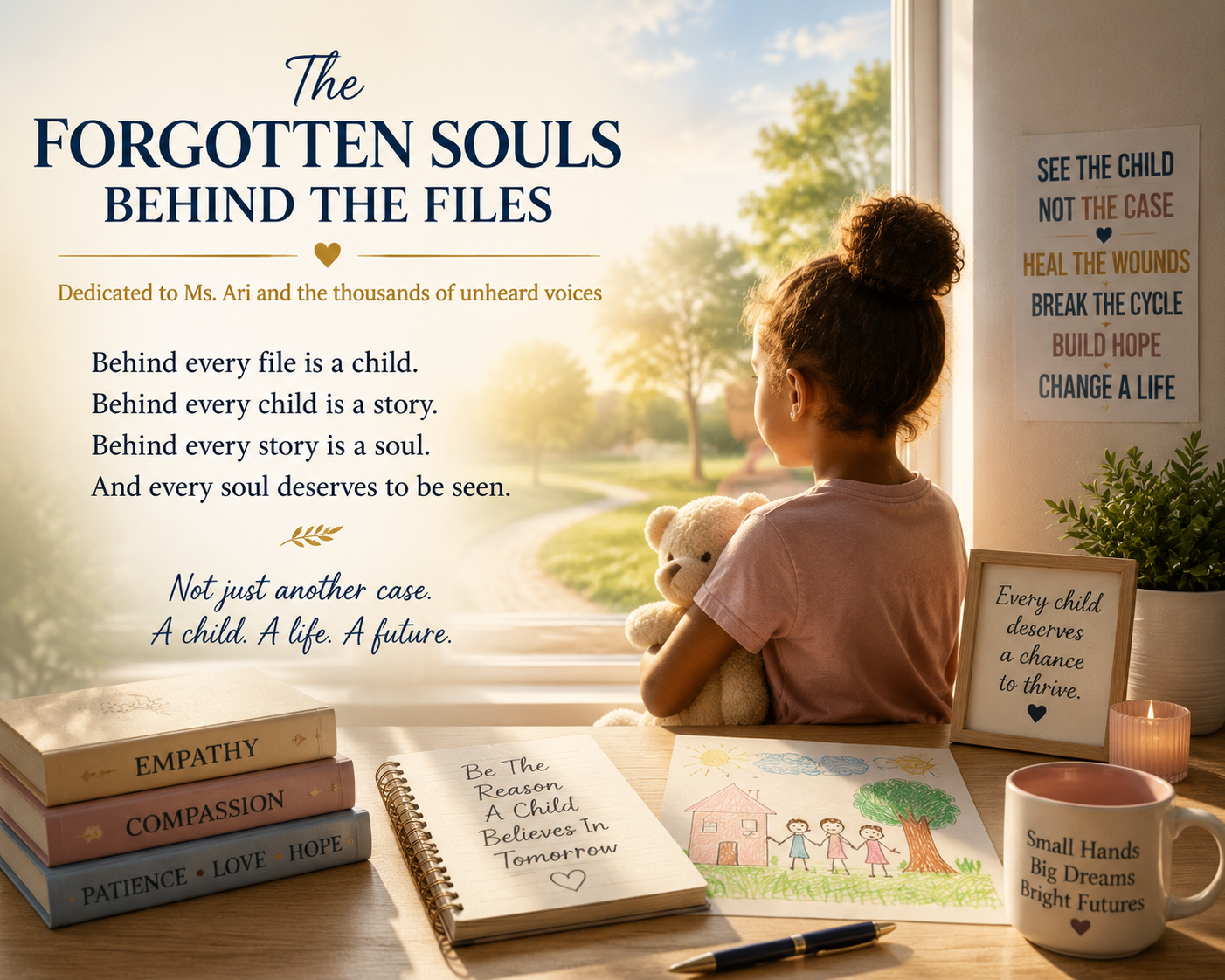
We tell ourselves a comforting story. That we've built systems to protect the people who can't protect themselves. That somewhere below every falling child, there's a structure standing ready to catch them before they hit the ground. We build offices for it. We write policies for it. We fill buildings with people whose entire mission is supposed to be protecting the innocent and handing children back the childhood their circumstances tried to steal. We call it a safety net, and mostly, we stop asking questions after that.
It is a comforting story because it lets the rest of us sleep at night. It lets us believe that somewhere, someone with the right training and the right resources is standing guard so we don't have to. But comfort and truth are not always the same thing, and the truth is harder to sit with. The truth is that a safety net is only as strong as the hands holding it, and those hands are stretched across more children than any net was ever built to hold. The truth is that policies written with good intentions still have to survive contact with underfunded offices, overworked caseworkers, and a system that measures success in closed cases rather than healed lives.
Stand close enough, and listen past the reports and the statistics, and a different story starts to surface. You start hearing the voices of children who quietly became names on documents instead of stories anyone actually sat down to hear. Because behind every case number, there's a heartbeat. Behind every folder, a child who had dreams before trauma ever taught them how to be afraid. And behind every decision made about that child's life is a young person trying to understand why the adults who were supposed to build safety somehow became the storm they had to survive instead.
Think about what that does to a child's understanding of the world. Before they've even learned their multiplication tables, before they've learned to ride a bike without training wheels, they've already learned that the adults meant to protect them can be the source of the danger instead. That lesson doesn't stay contained to childhood. It follows them. It shapes how they trust, or don't trust, every relationship that comes after. It shapes whether they believe, deep down, that they are safe anywhere, with anyone, ever again.
Take little Ari. Her story isn't really just one story, it's a stand-in for thousands. Children who came into this world needing love, protection, and guidance, and instead learned lessons no child should ever have to learn. Ari understood betrayal before she understood trust. She knew what it felt like when home became the source of the pain, before she ever got the chance to know what home was supposed to feel like in the first place.
And here is what most people outside the system never see. The damage doesn't end when a child is removed from danger. That's often just where a different kind of damage begins. A new placement, sometimes a good one, sometimes not. A new school, new faces, new rules to learn, all while carrying wounds nobody in the new environment can see just by looking at her. Ari doesn't get to leave her trauma behind at the door of her old home. She carries it into every classroom, every bedroom, every new relationship, until someone patient enough finally helps her learn how to set some of that weight down.
No child should have to become an expert in survival before they've had the chance to simply be a child. Trauma hands them armor before anyone ever hands them confidence. And removing a child from danger, as necessary as that is, is only ever the beginning of the work, not the end of it. Healing takes patience most systems don't have time for. It takes consistency most caseloads don't allow. It takes someone willing to look past the behavior a child's pain created and see the child underneath it.
That is the hardest ask of all, because a child in pain rarely presents as a child in pain. Pain in children often looks like anger. It looks like defiance, like pushing people away right when they get close, like testing every single adult who says they'll stay to see how long it actually takes them to leave. It takes a rare kind of caregiver to look at that behavior and not take it personally. To understand that the child pushing them away hardest is often the child who needs them to stay the most.
Because children are not problems waiting to be managed. They are promises. They are possibilities. They are lives that are still being written, one difficult chapter at a time. Every child in this system is still, underneath everything that's happened to them, a child who deserves the chance to become whoever they were meant to be before the world interrupted that process.
Then there are the caregivers, the ones who walk into these children's lives carrying something no policy manual can teach or require. Love. The ones who look past the behavior and see the wound underneath it. The ones who understand that behind the anger is fear, and behind every wall a child builds is really just a child begging someone, anyone, not to walk away this time.
These caregivers rarely get thanked properly. They absorb tantrums that have nothing to do with them personally and everything to do with years of accumulated hurt. They stay up late researching how to help a child who won't say what's wrong. They celebrate small victories that would look invisible to anyone outside the situation, a child sleeping through the night without a nightmare, a child saying "I love you" for the first time in years, a child finally letting themselves be hugged. These are the real milestones of this work, even though no policy document will ever measure them.
They bring compassion into rooms that were built for requirements. They bring human connection into a system that mostly speaks in paperwork, a machine that can count cases but forgets the names attached to every one of them, that can track a placement but has no way to measure a child's loneliness. Because every child, at the bottom of everything, just wants to be seen. Beneath the behavior is a human being. Beneath the trauma is a child. Beneath the file is a soul.
Ari never asked for the beginning of her story. She didn't choose the circumstances that let pain in first. But she deserves a future that's bigger than her past. She deserves to be remembered as more than a case. She deserves to be remembered as a child.
How many children have to be forgotten before we remember they were never paperwork to begin with? How many voices have to go quiet before we actually start listening? Every child still waiting inside this system isn't just a file waiting on a signature. They are someone's tomorrow. Someone's hope. A living reminder that love still matters, even now, even here.
We owe them more than a system that processes them. We owe them people who see them. We owe them the patience healing actually requires, the consistency trust is built on, and the belief, held by at least one adult in their life, that their story is not over just because it started badly. Every child deserves at least one person who refuses to give up on them, even on the days they give everyone every reason to.
For every Ari still waiting to be seen, for every caregiver still fighting, and for every child whose story hasn't been heard yet, their stories matter. Their voices matter. Their lives matter. Real change starts the moment we stop seeing children as cases to manage, and start seeing them as lives worth fighting for.